ABOUT VOKRAM

Verifiably create and discover safe superperforming human-AI teams.

Vokram is a multi-agent AI safety company building Lime-Team which are multi-human-AI alignment environments which replicate and amplifies your employees alongside Norn which secures and verifies your agents’ most safety-critical decisions.

1
2
3
4
Senior expertJunior employee

Illustrative workflows and evaluation outcomes.

1Extract reasoning from experts across disciplines

Codebases, databases, internal communications, and human expertise all carry organizational knowledge. Lime-Team brings verified data sources and shapes them into high quality context based on customized enterprise AI evaluations to generate expert synthetic employees.

Sources may include GitHub, Jira, Gmail, Slack, Discord, and Microsoft Teams.

2Discover new strategies from your data and generate polymath synthetic employees

Lime-Team connects reasoning across disciplines to train synthetic employees that can draw on multiple areas of expertise, explore new approaches, and solve complex problems. Connecting these perspectives helps uncover strategies that a single area of expertise might miss.

Each synthetic employee brings that breadth to a defined responsibility, exploring new approaches grounded in your organization’s data and goals.

3Secure, evaluate, and verify

Synthetic employees enter environments that reflect their responsibilities. Evaluations help assess how they perform, coordinate, and respond when a task becomes difficult. Our evaluations help you predict catastrophic events before they happen and audit agent behavior during operation. Norn guards your agents at runtime and self-improving red teaming constantly stress the system to protect your enterprise from new threats.

Security controls, verification, and evaluation evidence keep actions connected to the enterprise and the task. They support deployment decisions and enable best resource allocation.

4Amplify your team

Expert synthetic employees help human employees access expert reasoning in their own workflows. Senior experts gain reach, while junior employees gain support for unfamiliar or demanding work.

The aim is collective human intelligence that can keep pace with collective AI intelligence. Human judgment continues to shape goals, exceptions, and oversight.

Throughout history, humanity has shaped the world through collective intelligence, unlocked by efficient communication, tool use and collaboration in groups. Today, we are witnessing the rise of a new form of collective intelligence composed out of interacting AI systems. We believe that as these systems grow more capable, human oversight must grow with them; only then can humans and AI thrive and align together.

Our mission at Vokram is to amplify human expertise at every level and to strengthen the collective knowledge of human groups, so that people can align AI systems with their own personalized goals. We are committed to making this technology broadly available, along with the evaluation and optimization tools that put it within everyone’s reach.

For AI alignment, the central challenge is making human oversight possible at scale. Alignment today is largely approached as a single-agent problem. Real deployments are nothing like this. Millions of people with different goals will interact with many AI systems, and those systems will interact with each other. In real life, you will typically find that applying the wrong methods leads to:

  1. Lack of multi-agent safety: aligning agents one at a time says nothing about how they behave together. Misalignment emerges from the interactions among AI systems and the people using them, and that is where catastrophic decisions are made.
  2. Expensive and risky decisions: analyzing individual models does not scale, locks you into the models you have already studied, and carries a large opportunity cost in the ones you have not.
  3. Unauditable and unverifiability: when a multi-agent system fails, single-model evaluation cannot tell you which agent or which interaction was responsible. You learn that something went wrong, not who to audit.

Alignment at global scale will require many AI safety organizations working together. Vokram’s contribution is the regime where the tools of nonequilibrium statistical physics and stochastic thermodynamics apply i.e. mesoscopic populations of interacting agents, from a single person to an organization of thousands, whose collective behavior can be modeled, measured, and steered by the evaluations that the organization actually cares about.

To do this, AI systems need to learn and be evaluated in simulated environments. This means building multi-agent environments in which many AI agents and many human concepts interact, evolve, and are tested in a million possible configurations. Diffusion-based multi-agent reinforcement learning environments, paired with carefully designed multi-agent evaluations, are the foundational technology that makes this possible. Their design draws on nonequilibrium renormalization methods inspired by biophysics, which tells us which collective behaviors survive as the number of agents grows; rough path theory, which lets us evaluate highly irregular, path-dependent interaction histories rigorously; and the structure of string theory scattering amplitudes, which forms a north star for multi-agent communication and concept verifications. Engineering on the above ideas, our environments let us extract, use, and formally verify expert reasoning that other reinforcement learning environments cannot reach.

In summary, we are developing lime-teaming, which is the engineering, evaluation, and optimization of multi-human, multi-agent environments in which authenticated agents privately and securely merge each human's reasoning patterns and interpretation of the global context, leading to aligned human-agent teams with verifiable superperformance and scalable oversight.

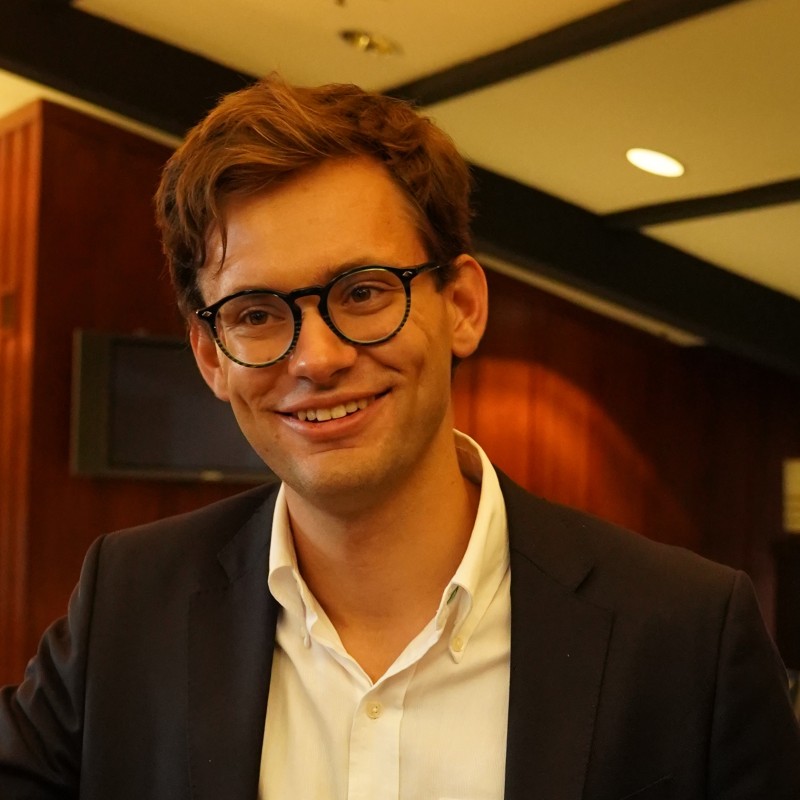
Vokram is composed out of hardened Berkeley/UCSF Physicists and AI Engineers who have spent their careers attacking the hardest, most important problems in quantum gravity and then applying their intuition to several other areas of studying including biophysics, diffusion model interpretability, reinforcement learning in nonverifiable environments and the frontiers of stochastic partial differential equations.

CONNECT

Contact
support@vokram.ai
Demo
Book a demo
Location
Berkeley

Book a demo

Leave us a message here — we reply within a working day.

We do not share information that you sent us with third parties. Privacy note.